PPAC Central
Cannabis
The week of July 4-10 is “National Marijuana Facts Week”. According to the Substance Abuse and Mental Health Services Administration (SAMHSA), THC, the chemical responsible for most of marijuana’s psychological effects, affects brain cells throughout the brain, including cells in circuits related to learning and memory, coordination, and addiction. Marijuana use can cause mood changes, and has been linked with depression, anxiety, panic, paranoia, psychosis, and, in some cases, an increased risk of schizophrenia, particularly for people with family history of schizophrenia, or who started using cannabis early in life.
“Greening out” is a term referring to the experience of acute toxicity, the adverse effects of cannabis overuse and high-potency THC products. These signs present in a more severe way than typical side effects and include extreme confusion, severe nausea or vomiting, paranoia, panic, increased heart rate, delusions or hallucinations, increased blood pressure, and/or anxiety.
July 10 is known as “OIL” day (710 upside down). Whereas 4/20 refers to cannabis culture in general, 7/10 refers to cannabis oil products, such as butane hash oil, dabs, extracts, and the concentrate side of cannabis culture.
Although cannabis use is legal for those twenty-one and older, legal does not mean safe. Visit the New York State Office of Cannabis Management’s website for information on licensing, products, and legal issues. Products purchased from sources other than a licensed dispensary are unregulated and can potentially be contaminated with mold, fungus, pesticides, and other chemicals that can be harmful if consumed.
It is not safe for pregnant women to use cannabis at any time during their pregnancy or during breast/chest feeding, as substances used by the mother are passed to her baby.
Mental health issues are a long-term hazard of cannabis use, and statistics show that 1 of 6 youth who begin using cannabis become addicted. For parents visit the Office of Cannabis Management’s Cannabis Honestly to learn real facts on cannabis and the importance of talking to the young people in your life about the dangers of cannabis use.
Focus on Impairment for National Safety Month

June is National Safety Month. Partners for Prevention in Allegany County(PPAC) and the Allegany Council on Alcoholism and Substance Use, Inc.(ACASA) is focusing on impaired driving by marijuana use. When the legalization of marijuana was proposed and passed, one positive that was surmised is that impaired driving and accidents would decrease. Fast forward to 5 years since legalization, and the New York State Troopers report that there has been a 20% increase in drug-related DWI arrests statewide. Nationally, the statistics are not any better.
The Centers for Disease Control and Prevention reports:
- National survey data shows that roughly 4.7% to 5% of Americans aged 16 and older admit to driving under the influence of cannabis annually. This makes marijuana the second most common substance associated with impaired driving after alcohol.
- Up to a third of regular cannabis users report driving within three hours of consuming.
- The rate of weekend nighttime drivers testing positive for THC has risen substantially, and recent studies show that over 40% of fatally injured drivers tested positive for recent marijuana use in some jurisdictions.
The prevalence of driving after cannabis use has increased significantly over the past decade. The thought that people who use marijuana do not get behind the wheel is false. Driving within 1 to 3 hours of consuming cannabis is especially dangerous because it impairs coordination, decision-making, and reaction times, roughly doubling the risk of a motor vehicle accident.
New York’s legalization does not mean that there are no rules to where, when, and how residents can use marijuana products. Marijuana products are legal for adults that are 21 years old or older. Below you will see what is legal and illegal for drivers and passengers of vehicles.

Marijuana use should be considered like alcohol: a person who chooses to use should not get behind the wheel of a vehicle or ride with someone who has been using. Plan on not traveling or have a designated driver. It is important for adults to understand the various types of THC products, how quickly the effects can be felt, and how long the effects last.

The Office of Cannabis Management(OCM) would like consumers to “Start Low and Go Slow”.
- “Start Low” with the amount of cannabis consumed and “Go Slow” when increasing the amount of cannabis consumed over a period of time.
- Start with a low serving size. (For someone who is new to cannabis and consuming an edible, that may mean between 2.5 to 5 milligrams). It may be necessary to cut the edible into a half or into quarters to start with or have fewer sips of a beverage rather than take the entire serving at once.
- After waiting and feeling safe to increase the amount, consume the same amount or less than what was previously consumed rather than going for a full serving size.
- Wait for 5-10 minutes after inhaling or vaping 1-2 puffs of cannabis before consuming more. It’s recommended to pause and sit with how a person feels before consuming more.
- Topicals can be portioned by how much of the product is applied at a time. If a dime sized amount of lotion is ineffective – increase to the size of a quarter, and so on.
- When eating or drinking cannabis products, THC is broken down in the liver and transforms into the metabolite 11-Hydroxy-THC (11-OH-THC), which is several times more potent than THC when it is smoked.
- When trying a new product for the first time, remember that different products can take longer to take effect. Wait for effects before taking more. Then the next time you consume you’ll know what the right amount for your body looks like. You can always take more if you aren’t feeling the effects, but you cannot take less!
PPAC and ACASA would like adults to not use products that contain THC, but for adults who do choose, we want them to be safe, not just for themselves, but also for everyone around them. Safety when using marijuana does not just mean while in a vehicle, but also at work. Similar to driving, there are rules about using marijuana products and impairment while at work. Read the OCM’s “Adult Use Cannabis and the Workplace” for more information.
LinkAdvanced
For anyone who feels their marijuana use has become an issue and would like help quitting, they can visit ACASA’s website for resources or contact their Clinic at 585-593-6738.
Please, everyone be safe for yourself and those around you.
Local Youth Fight Back Against Tobacco Giant Altria
Rally Raised Awareness of The Industry’s Powerful Tactics in Shaping Market Landscape, Impacting Public Health Outcomes
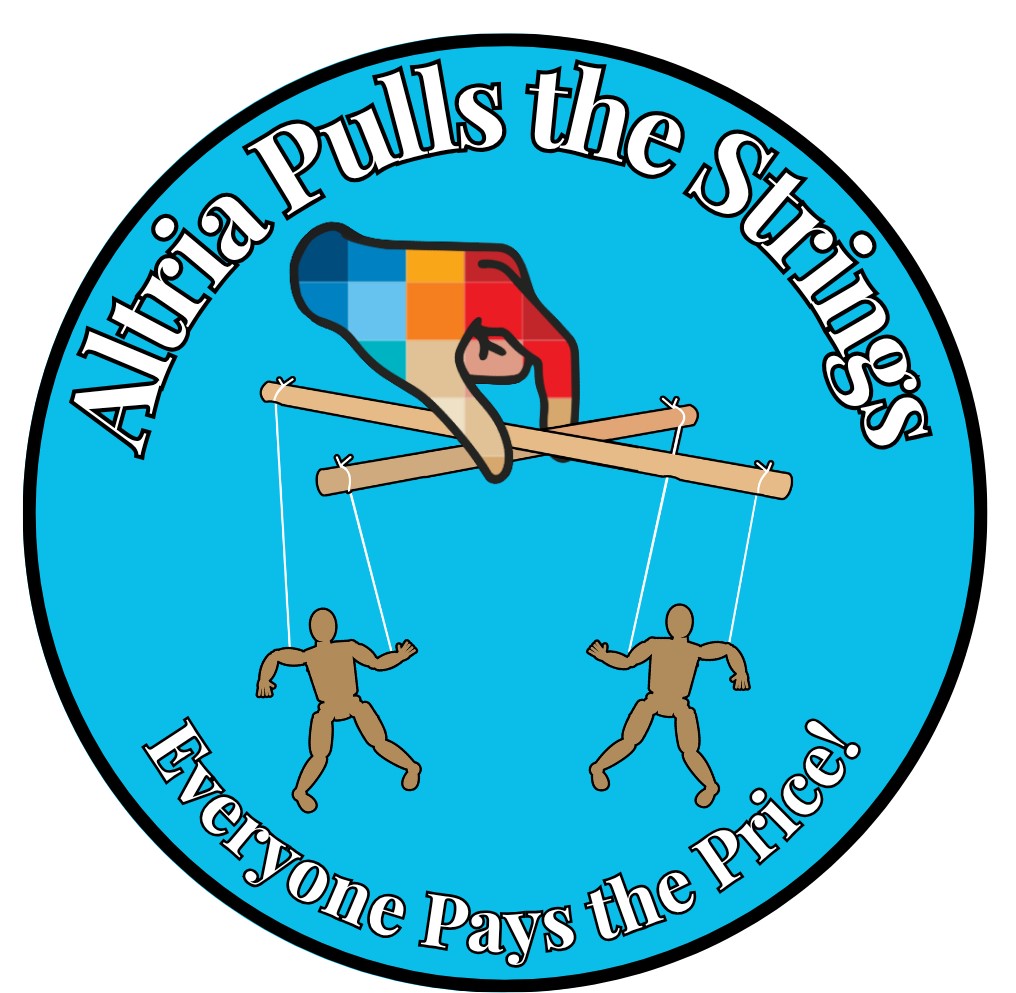
As Altria Group Inc. shareholders held their annual virtual meeting on May 14, approximately 30 youth advocates, including William Washburn, Grant Smolen, Maddy Meyers, and Ryan Benedict students at Fillmore Central School held a first amendment assembly in Washington, D.C. proclaiming the message: “Altria Pulls the Strings, Everyone Pays the Price!” Some students and adults logged into the Altria meeting through share ownership and submitted questions to the CEO about the power and corruption, demanding truth and corporate responsibility.
“I’m so proud of these young people for exposing the immense power through strategic manipulation of nicotine and aggressive marketing used by Altria and other tobacco companies to protect their profits,” said Jan Chaffee Reality Check Coordinator for Tobacco Free Chautauqua, Cattaraugus, Allegany. “Now that they have shared their voice in Washington, D.C., they plan to continue to address the challenges of tobacco use in their communities back home, as well as mobilize their peers to take action.”
This year marks the 11th consecutive year that Mobilize Against Tobacco Lies (MATL), a tobacco prevention group made up of several active youth groups from around the nation including Reality Check from New York, Dover Youth to Youth from New Hampshire and Campaign for Tobacco Free Kids Ambassadors from West Virginia and South Carolina. Their efforts are supported by the Campaign for Tobacco Free Kids, Truth Initiative and Corporate Accountability. Check out Mobilize Against Tobacco Lies on Facebook to view the first amendment rally outside Altria’s Lobbyist Office.

Big Tobacco has been lying about the deadly effects of cigarettes and manipulating the American people for decades, marketing to young people and minority populations, and lying to the public about the dangers of smoking.
For more than two decades, Altria’s tobacco companies claim to have made significant investments to reduce youth use of tobacco yet during those years Altria has targeted young people with candy- and fruit-flavored products, making them more appealing and accessible.
Altria also exerts its corporate power and serves its own agenda of making profits by:
- Exerting control over the political process to get their products in the marketplace
- Staging strong lobbying efforts to shape tobacco control laws
- Despite falling cigarette volumes, Altria continues to exert pricing power to maintain high earnings, targeting growth of roughly 2.5% to 5.5% in 2026.
- Influencing market trends to boost sales through heavy price discounts, retail promotions and the introduction of flavored “reduced-risk” alternatives like nicotine pouches.
Now, Altria has adopted new product, NJOY, electronic cigarettes and vaping products, as the latest marketing frontier to pull consumers’ strings.
- NJOY has faced scrutiny over its marketing and product safety, including allegations about misleading consumers about the health risks and patent infringement issues that have significantly impacted U.S. market presence.
- While some products received FDA authorization, others have faced bans, and consumer complaints exist regarding product quality and addictive nicotine levels.
“Altria and other tobacco corporations have used the same playbook for decades: lie about their products, manipulate science and policy, and addict children to create lifelong customers,” says Daniel Dorado, Tobacco Campaign Director, Corporate Accountability. “The tobacco industry rakes in nearly one trillion dollars a year, while we pay the price. But people around the world have had enough and are demanding that lawmakers Make Big Tobacco Pay for the harm it’s caused to our families and our planet.”
The lies don’t end there. Tobacco companies falsely denied that they can and do manipulate the level of nicotine in their products to create and sustain addiction and have been since at least 1954.
– Tobacco companies falsely denied, distorted and minimized the link between cigarette smoking and disease. – Tobacco companies concealed evidence and publicly denied that nicotine is addictive.
– Tobacco companies falsely marketed and promoted low tar and light cigarettes as less harmful than regular cigarettes to keep people smoking and sustain revenue
– Tobacco companies internally acknowledged that secondhand smoke is hazardous to non-smokers yet still gave false and misleading public statements denying this fact.
###
Reality Check New York empowers youth to become leaders in their community in exposing what they see as the manipulative and deceptive marketing tactics of the tobacco industry. The organization’s members produce change in their communities through grassroots mobilization and education. Reality Check in this area is affiliated with Tobacco-Free Chautauqua, Cattaraugus and Allegany (TF-CCA). Tobacco-Free CCA is a program of Roswell Park Comprehensive Cancer Center.
For more information about Reality Check, visit realitycheckofny.org.
The NYS Tobacco Control Program is made up of a network of statewide contractors who work on Advancing Tobacco-Free Communities, which includes Community Engagement and Reality Check, the Health Systems for a Tobacco-Free New York, the NYS Quitline and Surveillance and Research. Their efforts are leading the way toward a tobacco-free society. For more information, visit TobaccoFreeNYS.org and NYSmokeFree.com.
More Than Likes: Supporting Teen Self-Esteem in Today’s World

When people think about low self-esteem in teenagers, they often picture a shy student with low confidence. In reality, it does not always look that obvious.
Sometimes it looks like a student who shuts down the second they think they might fail. Sometimes it is the teen who constantly apologizes, compares themselves to everyone around them, or feels like they are never good enough no matter how hard they try. Other times, it can show up as anger, attention-seeking behavior, perfectionism, avoidance, or needing constant reassurance from others.
As school counselors, we see more and more students struggling with confidence, self-worth, and feeling secure in who they are. Today’s teenagers are growing up in a world where they are constantly connected, constantly comparing, and constantly feeling pressure to measure up. Social media has made it nearly impossible for many teens to simply “be kids” without feeling judged or evaluated.
Many teens tie their worth to grades, sports performance, appearance, relationships, social status, or how many people liked a post online. Even students who appear confident on the outside are often carrying a tremendous amount of self-doubt internally.
One thing I think adults sometimes forget is that teenagers are still learning who they are. Their brains, emotions, friendships, and identities are all developing at the same time. A bad grade, friendship issue, breakup, rumor, or social media post may seem small to an adult, but to a teenager it can feel overwhelming and deeply personal.
So, what can adults do to help?
One of the biggest things is creating spaces where teens feel accepted without feeling like they have to be perfect. Teens need adults who listen without immediately lecturing, fixing, or dismissing their feelings. They need to know they can struggle, make mistakes, and still have value.
It is also important to praise effort, resilience, kindness, and growth, not just achievements. When teens only hear praise tied to performance, they can start believing their worth depends on what they accomplish rather than who they are as a person.
Encouraging healthy friendships, involvement in activities they enjoy, balanced screen time, and opportunities to build confidence through real experiences can also make a huge difference. Sometimes self-esteem grows from simply helping a teen discover something they are good at or reminding them they matter outside of academics, sports, or social media.
Adults should also pay attention to warning signs that a teen may be struggling more deeply. Isolation, hopelessness, major changes in behavior, harsh self-talk, anxiety, depression, or comments about not wanting to be here anymore should always be taken seriously.
Most importantly, teens need trusted adults. A parent, family member, coach, teacher, counselor, or mentor who consistently shows up can have more impact than they realize.
Building healthy self-esteem does not mean teaching teens to think they are perfect. It means helping them understand they still have worth on the days they struggle, fail, feel insecure, or fall short. That belief becomes the foundation for resilience, healthy relationships, and emotional well-being later in life.
If you are concerned about a young person struggling with self-esteem, reach out. School counselors, mental health professionals, and community support organizations can help connect teens and families with resources and support.
Spring Pill Drop held in Conjunction with the DEA’s National Take Back Day
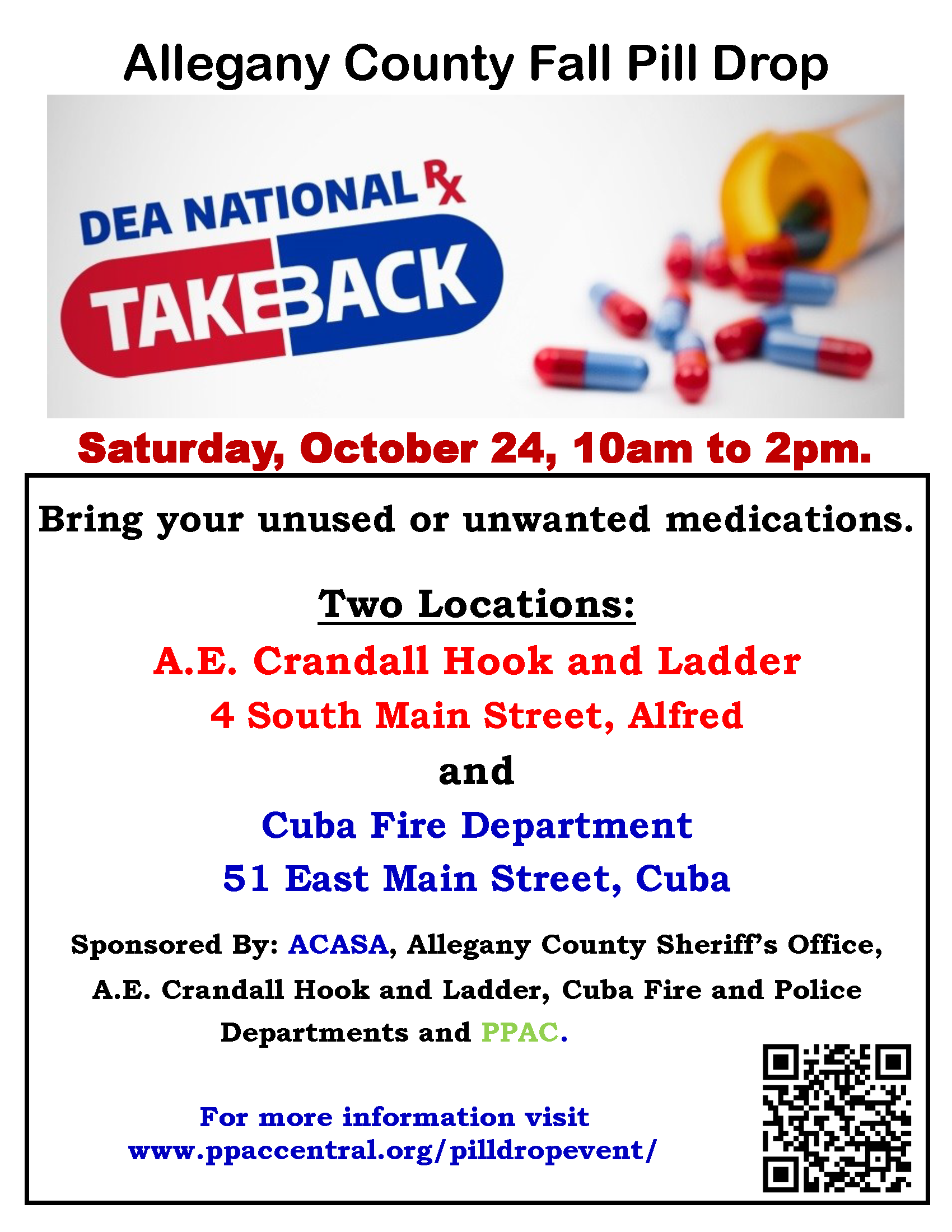
This past Saturday, April 25 from 10am to 2pm the Allegany Council on Alcoholism and Substance Abuse, Inc. (ACASA), the Allegany County Sheriff’s Office, the Angelica Fire and Rescue, Wellsville Volunteer Fire Department, and Partners for Prevention in Allegany County (PPAC) held their biannual pill drop event in conjunction with the Drug Enforcement Administration’s (DEA) National Take Back Day. 14 cars brought over 58 pounds of unused or expired medication. The agencies use the pill drop events to educate the community on proper disposal of medications and needles and the availability of the fourteen Take It to the Box locations that are throughout Allegany County. The Take It to the Box locations offer community members the opportunity to dispose of medications year-round for free. Allegany County residents also can dispose of needles at any of the Allegany County Transfer Stations for free. Community members are asked to put needles into a puncture proof container like a laundry detergent bottle with the cap securely on. Allegany County is one of the very few counties in New York that offers this service for free.

In the past people were advised to flush unwanted to expired medications down the sink or toilet. Scientific studies showed that medications were being found in water supplies and fish, which led to the first medication take back programs. Pill Drop events have been held in Allegany County since 2008. All medications are collected by the Allegany County Sheriff’s Office and taken to an incinerating location that makes the medications harmless to the environment and unusable by people.
“Educating the community on the resources that are available to them all year with the Take It to the Box locations and needle disposal at the Allegany County transfer stations is important,” states PPAC Coalition Coordinator Jon Chaffee. “People cannot use resources they do not know exist,” states Chaffee.
The partners would like to “Thank” the Angelica Fire and Rescue and Wellsville Volunteer Fire Departments for providing space and support for the 2026 Spring Pill Drop.
The next pill drop event will be held in October of 2026. To find out where all the Take It to the Box locations are located throughout Allegany County visit www.ppaccentral.org/takeittothebox/. If you want to know more information about the National Take Back Day or find other locations you can visit https://www.dea.gov/takebackday. For questions people can also reach out to Coalition Coordinator Jonathan Chaffee by emailing ppac@alleganycouncil.org or calling (585) 593 – 1920.
April is National Child Abuse Prevention Month

Each April, during Child Abuse Prevention Month, we recognize and thank the professionals across Allegany County’s education, healthcare, and public safety sectors who support the health, safety, and well‑being of our community’s children.
This month , we also acknowledge the difficult reality that even with strong, engaged community supports, child abuse and neglect still occur in Allegany County. Recognizing this truth is uncomfortable, but it underscores the critically important work of Allegany County’s child welfare professionals.
Allegany County child welfare caseworkers carry the primary responsibility for responding to reports of child abuse and maltreatment. These caseworkers—along with supervisors, attorneys, foster parents, and other supporting staff—carry out their work with deep expertise and extraordinary dedication. Their prompt and skilled responses are a vital part of the safety net protecting Allegany County’s most vulnerable children.
On any given day, child welfare caseworkers can be found on the stand testifying in Family Court; developing safety plans with parents and children at the Child Advocacy Center; or loading garbage bags with household clutter to help a parent make a hoarded home safe for their children. Every night, weekend, and holiday, there is a child welfare caseworker and supervisor on call and ready to immediately respond to reports made to New York State’s Central Register of Child Abuse and Maltreatment.
Child welfare work is complex and demanding. Professionals are tasked with continuously monitoring child safety while respecting family and parental autonomy. The work requires an in-depth knowledge of regulations and best practice; high levels of interpersonal engagement skills; and the ability to navigate complicated and ever-changing services and systems to meet family needs. Most of all, it requires compassion, and the ability to set aside judgment to truly hear the stories of families carrying the heavy burdens of poverty and trauma. All of this while managing endless amounts of paperwork. During Child Abuse Prevention Month, PPAC extends genuine appreciation to Allegany County’s child welfare professionals. Your commitment, skill, and compassion make a difference every single day in the lives of children and families in our community.
Resources
Nicotine Pouches Not an Approved Way to Quit
As expected, Gov. Hochul’s proposed excise tax on the sale of nicotine pouches, similar to taxes on other non-cigarette tobacco products, has supporters and detractors. I urge you not to accept claims that nicotine pouches, like Zyn, should be exempt from tobacco excise taxes because they are approved for smoking cessation. That’s wrong. There are a variety of FDA-approved, medically backed, safe nicotine replacement therapies (NRT), available both over-the-counter and by prescription. They provide controlled, standardized doses of nicotine (typically 2 mg or 4 mg) to gradually reduce addiction. Pouches are marketed in a much wider range of nicotine, some reaching concentrations up to 50 mg or higher per pouch, which can maintain and even increase addiction levels. And NRT flavors are restricted to basic options like mint to avoid appealing to youth. Pouches feature extensive, often sweet flavors like “Berry Frost” or “Mango Tango” which appeal to youth. New York State has finally seen a significant drop in youth vaping—just in time for the tobacco industry to come along with another new product to attract and addict our youth. Nicotine pouches are not approved for smoking cessation, and it is well known that tax increases on tobacco products reduce tobacco use, especially among youth.
The good news is if you are thinking about or want to quit tobacco use as an Allegany County resident you have options, first option is visiting the New York State Quitline or contacting them at 1-866-697-8487 for free nicotine replacement therapy and counseling. Second option is visiting the Allegany Council on Alcoholism and Substance Abuse, Inc. (ACASA) for free local help.
January is National Birth Defects Awareness Month

January is National Birth Defects Awareness Month, with “Every Journey Matters” as this year’s theme. According to information from the New York State Office of Cannabis Management website, one critical area to consider is that of avoiding harmful substances during pregnancy, such as cannabis. Based on studies of both human and animal subjects, leading medical organizations such as the American College of Obstetricians and Gynecologists and the American Academy of Pediatrics recommend that anyone who is contemplating pregnancy, is pregnant, or is breastfeeding should stop using cannabis. When mommy uses any substance, so does baby. Chemicals in cannabis pass through the mother and can harm a baby’s development. Included is cannabis smoke, which has many of the same chemicals as tobacco smoke, which are known to be harmful to both mother and baby.
Cannabis purchased from the illicit market, not from a licensed dispensary, can pose additional risks as it is not tested or regulated. These products can potentially be contaminated with mold, fungus, pesticides, or other chemicals that can be dangerous if consumed. Potency levels may also not be labeled or labeled accurately.
Expectant mothers who take medical cannabis are strongly encouraged to talk with their health care provider about the possible risks/benefits during pregnancy, and ask about other medications or treatments which may have more pregnancy-specific safety data. This is also suggested for women experiencing morning sickness, as there have been no clinical trials or studies to prove that cannabis is an effective way to treat morning sickness.
Benefits of breastfeeding are vast for both mother and baby. For more information on cannabis and the impact on breastfeeding, view the Breastfeeding Ground Rounds entitled Marijuana Use During Pregnancy and Breastfeeding, hosted by the SUNY University at Albany School of Public Health. Let’s support our future generation of babies by encouraging potential mothers to choose a healthy lifestyle free of substances! Be an active participant in this important initiative by visiting the National Birth Defects Prevention Network (NBDPN) website for resources. For assistance with a substance use disorder, call the Allegany Council on Alcoholism and Substance Abuse’s Clinic at 585-593-6738.
Resources
Cannabis Considerations for Pregnant and Breastfeeding/Chest Feeding Individuals
CDC’s Substance Use During Pregnancy
What You Should Know About Using Cannabis, Including CBD, When Pregnant and Breastfeeding
Early Family Literacy: Building Strong Foundations for Lifelong Learning
Why Early Literacy Matters
Early literacy is more than teaching children to read—it’s about creating an environment where language, communication, and curiosity thrive from birth. Research shows that the first five years of life are critical for brain development. During this time, children build the foundation for vocabulary, comprehension, and social-emotional skills that influence academic success and lifelong learning.

The Role of Families
Families are a child’s first teachers. Everyday interactions—talking, singing, reading aloud, and playing—shape language development. When parents and caregivers engage in literacy-rich activities, they foster:
- Vocabulary Growth: Exposure to diverse words through conversation and books.
- Comprehension Skills: Understanding stories and concepts through shared reading.
- Emotional Connection: Bonding during reading time builds trust and security.
Practical Strategies for Families
- Read Aloud Daily: Even a few minutes of reading strengthens language skills.
- Talk About Everything: Narrate daily routines, ask open-ended questions, and encourage storytelling.
- Create a Print-Rich Environment: Display books, labels, and written notes around the home.
- Use Music and Rhymes: Songs and rhymes enhance phonemic awareness.
- Model Reading Behavior: Let children see adults enjoying books and newspapers.

Overcoming Barriers
We know not all families have equal access to books or literacy resources. Community programs, libraries, and nonprofits play a vital role in bridging gaps by:
- Providing free books and story hours like Dolly Parton’s Imagination Library (Early Childhood Development Coalition and Ardent Solutions).
- Offering parent workshops on early literacy techniques.
- Creating culturally responsive materials that reflect diverse families.
The Bigger Picture
Early family literacy isn’t just about reading—it’s about equity, empowerment, and opportunity. When families are supported in fostering literacy, children enter school ready to learn, reducing achievement gaps and promoting lifelong success.
Join other families every Tuesday from 10a.m.-12p.m. at the First Step Family Resource Center, 83 N. Main Street, Wellsville, New York 14895 for Dolly Parton’s Imagination Library story time and sign-up today to receive free, quality, age-appropriate books for your children up to age 5 at Check Availability – Dolly Parton’s Imagination Library. Further information, please contact Robin Fuller at 585-803-4526 or email fullerr@ardentnetwork.org.
Beware of Tobacco Companies’ Candy-flavored Tricks
‘Companies are making these products look and smell sweet like candy.’


As Halloween approaches, Tobacco-Free Chautauqua, Cattaraugus and Allegany (TF-CCA) is calling out the tobacco industry’s continued use of candy flavors and packaging to lure kids to addiction. E-cigarettes, nicotine pouches and cigarillos come in sweet flavors and colorful packaging that imitates popular candy brands. These added flavors make starting tobacco use easier and quitting even harder.
“To protect public health, especially for youth, the 2009 Family Smoking and Tobacco Prevention Act banned the sale of cigarettes with ‘characterizing’ flavors other that tobacco or menthol,” says Jonathan Chaffee, Reality Check Youth Coordinator for TF-CCA. “However, other flavored tobacco products have remained on the market and become much more prevalent in the years since, including smokeless tobacco, little cigars and cigarillos, e-cigarettes and nicotine pouches, which are sold in an array of flavors in addition to menthol cigarettes.”
“Vampire Kiss, Tropical Fusion, Rainbow Custard and Strawberry Shortcake…they all sound like tasty Halloween treats, but they are actually flavors of tobacco and nicotine products that attract and addict youth,” says Dr. Maansi Bansal-Travers, Tobacco Control Outreach Program Director at Roswell Park Comprehensive Cancer Center. “Big Tobacco’s flavor tricks are a key reason why teens in our community are vaping and using nicotine products. Companies are making these products look and smell sweet like candy.”
More Big Tobacco Tricks
Introducing new and limited-edition flavors.
Tobacco companies regularly increase their flavor offerings to attract new users and feature limited-edition or seasonal flavors like “Summer Fusion,” “Harvest Blend,” or “Spiced Rum.” These flavors are driving youth use. In fact, a study from the Centers for Disease Control and Prevention (CDC) found that over 80% of high school and middle school students who use e-cigarettes use flavored products, with fruit, candy/desserts/other sweets, mint and menthol reported as the most popular flavors.
Emphasizing flavors in advertisements and colorful imagery on packaging.
The packaging and other marketing of flavored tobacco products emphasize flavors with bright colors and enticing descriptors like “Icy Wintergreen,” “Sweet Apple,’ and “Refreshingly Bold Citrus.”
Paying to place them strategically in retail environments.
Displaying flavored tobacco products on countertops near candy is a deliberate marketing tactic used by the tobacco industry to be more visible and easily accessible to youth. They pay a big price for this premium shelf space.
Are your kids bringing home a Big Tobacco trick or a Halloween treat? TF-CCA urges parents to beware of candy-flavored e-cigarettes, cigarillos and nicotine pouches this spooky season and beyond.
NYS Quitline is available to help.
Anyone who lives in New York State may contact the NYS Quitline by calling 1-866-NY-QUITS (1-866-697-8487). They can also visit nysmokefree.com to reach a specialist through an online chat, request a call-back or order free nicotine replacement therapy (NRT) medications. The NYS Quitline additionally offers a variety of free texting programs for those seeking help at their fingertips. Learn2QuitNY and Vivir Sin Tobaco Es Vida (culturally tailored for Spanish-speaking communities) provide daily texts and weekly goals; text QUITNOW or DÉJELO YA NY to 333888 to register. The NYS Quitline’s latest texting service, ‘Drop The Vape’, supports young people and young adults in their efforts to overcome nicotine addiction. Registration and more information is available at DropTheVape.com.
Allegany County residents can get local help quitting by contacting the Allegany Council on Alcoholism and Substance Abuse, Inc. (ACASA) at 585-593-1920 ask for Ann.