PPAC Central
Spirituality: An important aspect in helping to heal
Individuals often ignore the positive aspects of spirituality as it relates to recovery from addictions, trauma and various mental health issues.
The Substance Abuse and Mental Health Services Administration (SAMHSA), under the U.S. Department of Health and Human Services (HHS), says that:
“Individual trauma results from an event, series of events, or set of circumstances that is experienced by an individual as physically or emotionally harmful or life threatening and that has lasting adverse effects on the individual’s functioning and mental, physical, social, emotional, or spiritual well-being.”
Leaders at Allegany Hope have found this determination flashed on the screen over the years near the beginning of many training sessions on healing from trauma, but the spiritual well-being component ia promptly forgotten as the focus turns strictly to the mental health practices.
Our holistic health approach for Building Healthy Communities Through Health Families, however, focuses on what we describe as a three-legged stool approach in regard to holistic health: physical, mental/emotional and spiritual. When any one leg is or becomes shorter than the others, we find it often results in one’s life being thrown out of balance, thereby impacting the other two supporting legs.
The Federal Emergency Management Agency (FEMA) recognizes the important of the spiritual component for holistic recovery in times of disasters, encouraging building of a “Whole Community Approach to Emergency Management” which enlists faith communities for response to crises.
The HHS, in its “Youth Mental Health and Well-being in Faith and Community Settings: Practicing Connectedness” toolkit, notes that “faith can be a community of belonging, connection and support” for many youth. The agency has established a Center for Faith-based & Neighborhood Partnerships to aid in connecting communities with churches and other faith-based community organizations.
The Veterans Administration National Center for PTSD highlights the “Relationship of Trauma to
Spirituality,” as it describes “Spirituality and Trauma: Professionals Working Together.”
The Centers for Disease Control and Prevention (CDC) even publishes resources on how faith communities can aid in providing support to individuals in need of managing diabetes and smoking cessation.
SAMHSA notes in a report on “Promoting Wellness for Better Behavioral and Physical Health”
that “wellness is a holistic approach to health that is vital for improving outcomes among people with behavioral health conditions.”
Allegany Hope’s work in facilitating Christ-centered GriefShare and DivorceCare groups has found repeatedly that individuals embracing spiritual healing can discover significant victories in recovery from these traumas, often in shorter times to do so.
Celebrate Recovery and faith-based fatherhood initiatives, both inside and outside jails and prisons, have helped turn around destructive patterns for both individuals and their families.
Thus, the importance of spirituality and connection with safe faith communities shouldn’t be ignored by either individuals in various levels of crisis or those seeking to assist them.
Remember Prevention Works!

Casey Jones is president of Allegany Hope, a Christ-centered nonprofit ministry, who has been a facilitator for GriefShare, How to Help Grieving Children, DivorceCare, Life’s Healing Choices, Celebrate Recovery, Celebrate Recovery Inside (jails and prisons), InsideOut Dad, Malachi Dads, and other recovery ministries He can be reached at AlleganyHopeWNY@outlook.com.
Community Members Start Spring Cleaning at Allegany County’s Pill Drop
On Saturday, April 22 the Allegany County Spring Pill Drop was held in conjunction with the Drug Enforcement Administration’s (DEA) National Prescription Drug Take Back Day. Friendship and Wellsville were chosen for the spring locations. The pill drop event allows the community to drop off unused, expired, or unwanted medications, needles/sharps, and provides the opportunity for education on the location of the fourteen Take It to the Box locations throughout Allegany County.

This event was held in partnership with the Allegany Council on Alcoholism and Substance Abuse, Inc.(ACASA), the Allegany County Sheriff’s Office, and Partners for Prevention in Allegany County(PPAC). Medications were accepted from 10am to 2pm, and between the two locations, a total of 11 cars participated and 40 pounds of medications were collected. “The DEA’s Take Back Day allows us to provide a needed resource for our citizens and help educate them on the proper disposal of medications, this in turn helps to keep these medications out of the wrong hands and from contaminating our environment,” stated Undersheriff Walt Mackney.
Each car that stopped received a Deterra bag, to dispose of medications properly at home and a Take It to The Box magnet, which lists all of the pill drop box locations throughout Allegany County, which includes:
- Alfred Pharmacy, 36 North Main Street, Alfred, NY 14802.
- Alfred State’s Office of University Police, 10 Upper College Drive, Alfred, NY 14802.
- Allegany County Sheriff’s Office, 4884 NY-19, Belmont, NY 14813.
- Cuba Pharmacy, 2 Center Street, Cuba, NY 14727.
- Cuba Police Department, 15 Water Street, Cuba, NY 14727.
- Fillmore Pharmacy, 10560 NY-19, Fillmore, NY 14735.
- Fisher’s Pharmacy, 138 North Main Street, Wellsville, NY 14895.
- Friendship Pharmacy, 9 West Main Street, Friendship, NY 14739.
- Jones Memorial Hospital, 191 North Main Street, Wellsville, NY 14895.
- Jones Memorial Medical Practice, 20 Main Street, Andover, NY 14806.
- Jones Memorial Medical Practice, 120 First Street, Bolivar, NY 14715.
- Nicholson Pharmacy, 36 Schuyler Street, Belmont, NY 14813.
- Tri-County Family Medicine, 12 North Church Street, Canaseraga, NY 14822.
- Wellsville Police Department, 46 South Main Street, Wellsville, NY 14895.
In 2022, 1,800 pounds of medications were collected from the pill drop box locations by the Sheriff’s Office. “The pill drop boxes continue to be used more and more by the community, which makes the pill drops less active than prior years, but the goal is for people to not hold onto their unused or unwanted medications,” states PPAC Coalition Coordinator Jon Chaffee.
More information about the pill drop box locations can be found at https://ppaccentral.org/takeittothebox/ .
The pill drop events and boxes are completely anonymous and confidential. The collected medications are transported to an undisclosed location for incineration by the Allegany County Sheriff’s Office. Incinerating the medications makes them useless to people and harmless to the environment.
Allegany County also has free sharps/needle disposal available at all Allegany County Transfer Stations. The days and times that these locations are open are different per location. Below is a listed of all the locations.
- Alfred, 394 Satterlee Hill Road. Open Friday, and Saturday 8am to 3:30pm.
- Belmont, 6006 County Road 48. Open Tuesday through Saturday 8am to 3:30pm.
- Bolivar, 135 Reed Street. Open Wednesday, Thursday, and Saturday 8am to 3:30pm.
- Canaseraga, 89 West Main Street. Open Saturday 8am to 3:30pm.
- Caneadea, 9425 Molyneaux Road. Open Wednesday and Saturday 8am to 3:30pm.
- Cuba/Friendship, 7912 County Road 20. Open Thursday and Saturday 8am to 3:30pm.
- Wellsville, 77 Dyke Street. Open Tuesday through Saturday 8am to 3:30pm.
For any questions on the Allegany County Sharps Disposal Program contact Recycling Coordinator Tim Palmiter (585) 268-7282. More information about the Sharps Disposal Program can be found at https://ppaccentral.org/needledisposal/ .
The agencies involved would like to send out a special “Thank You” to the Friendship and Wellsville Fire Departments for giving us a space to hold the pill drop event. The next pill drop event will be held in October, 2023.
Haze about NYS Cannabis Laws and Health Effects of Cannabis Use
The Office of Cannabis Management (OCM) has announced that licenses for recreational cannabis dispensaries will start to be processed for Western New York. Currently, there are no licensed dispensaries in Western New York, which means that none of the cannabis products being sold at current businesses have gone through New York testing requirements, where or how the product has been grown or processed, or percentage of tetrahydrocannabinol (THC) the product contains. All licensed cannabis dispensaries will have a placard with a QR code that customers can scan to verify the business is licensed. OCM has a verification tool on their website that lists all New York licensed cannabis dispensaries, if a store is not on this list that means it is not a licensed dispensary.

Even though possession and use of cannabis has been legal for over a year in New York for adults 21 and older there are still several misunderstandings over what is legal and not legal.
- It is legal for an adult 21+ to possess 3 ounces of cannabis and 24 grams of cannabis concentrate.
- It is legal for an adult 21+ to “share” cannabis with another adult 21+ under the legal limit, without compensation. It is illegal to distribute or sell cannabis without a license.
- It is legal for adults to consume cannabis in private homes and places where tobacco can be smoked. Smoking cannabis is illegal in private businesses, in a vehicle, or any place tobacco cannot be smoked. In October of 2022, New York made all state parks and other public outdoor spaces smoke-free of cannabis and tobacco.
- It is illegal for driver or passengers in a vehicle driving or parked to be using cannabis.
- It is illegal to drive under the influence of cannabis.
These are just some of the more common questions or comments from the public pertaining to what is legal and illegal. For more information people can visit www.cannabis.ny.gov/adult-use .
Young people also have misconceptions about cannabis that adults need to help them understand, especially that legal does not mean safe. Science has shown that THC can affect the developing brain, which is not fully developed until age 25-26. The part of the brain that is responsible for making decisions (the prefrontal cortex) is one of the last parts of the brain that develops and is particularly impacted by cannabis use. Negative cognitive effects can include difficulty thinking and solving problems, problems with memory and learning, reduced coordination, difficulty maintaining attention, and problems with school and social life after consistent consumption. Frequent cannabis use in youth can increase the risk of mental health issues, including depression, social anxiety, acute psychosis, and schizophrenia. Cannabis consumption, especially frequent (daily or near daily) consumption and consumption that begins at an early age has been associated with schizophrenia and psychosis. Studies have shown that smoking cannabis exposes the user to the same types of dangerous chemicals as smoking cigarettes. A recent study out of Roswell Park Comprehensive Cancer Center found that vaping cannabidiol (CBD) leads to more severe lung damage than vaping nicotine.
Parents and mentors: You can impact whether the young people in your life consumes cannabis. Start the conversation with them early and have it often. Conversations about substance use should not be one sixty-minute conversation, but sixty, one-minute conversations. Make sure they understand the consequences and the negative impact it can have on their growing, developing brain. Pre-teens, teens, and young people in their early 20s tend to seek out new experiences and engage in risky behaviors, like using cannabis. For conversations resources visit www.talkitover.org .

Parents and community members can also follow PPAC Central on Facebook, Instagram, and Twitter to receive current information on resources, activities, and family events.
March 20 – 26 is National Drug and Alcohol Facts Week

This March 20th marks the 13th National Drug and Alcohol Facts Week (NDAFW), first launched in 2010 by the National Institute on Drug Abuse (NIDA). The purpose of this week is to counteract the myths that youth get from the Internet, television, movies, music, or friends, and replace those myths with scientific facts about substances, addiction, and health.
Listed below are teens’ ten most frequently asked questions from more than 118,000 queries received over the years during NDAFW.
10. Why do people use drugs when they know they might cause problems?
9. What are the effects of drugs like Xanax and Percocet?
8. What are bath salts?
7. Can you get addicted to ADHD meds?
6. Is vaping bad for you even if it’s just flavoring?
5. How can I help someone with a problem stop taking drugs? How can I help if they don’t
want help?
4. If a pregnant woman takes drugs/smokes/drinks alcohol, what happens to her baby?
3. Can marijuana be used as medicine?
2. Which is more habit-forming: smoking cigarettes or vaping nicotine?
1. What is the worst drug?
Answers to these questions can be found by visiting “Start a Conversation: 10 Questions Teens Ask About Drugs and Health”. The NIDA/NIH website is a wealth of information that includes the reasons for studying addiction in teens, signs and symptoms of drug use, video clips on the brain, and other related topics. The more informed our youth are about substances and the negative impact those substances can have on their lives, the less likely they are to engage in risky behaviors.
According to the local Allegany County data from the 2021 Risk and Protective Factor Survey, 12th graders reported the following related to 30-day substance abuse. 74.1% had NOT used alcohol; 95.9% had NOT used traditional cigarettes; 72.4% had NOT used e-cigarettes; and 84.1% had NOT used marijuana. We can all do our part by supporting our youth, getting the facts, and reminding them that NOT all youth are using substances, which is a popular myth among this population.
You can help educate the young people in your life by sharing the below social media posts.


Remember, Prevention Works!
Resources
March is PGAM (Problem Gambling Awareness Month)

Did you know that March is Problem Gambling Awareness Month (PGAM)? With the expansion of gambling opportunities in NYS the gambling landscape has drastically changed. This increase in accessibility and availability is putting more people at risk, making the work of raising awareness of problem gambling more important than ever before.
Gambling means risking something of value on a game of chance in the hopes of a positive outcome. While many people participate in gambling activities, for some it can lead to problems.
Simply put, problem gambling is when gambling starts having a negative impact in your life. This impact can lead to gambling disorder or gambling addiction. The consequences can affect one’s mental health, damage relationships, create difficulty at work or school, and lead to financial problems.
Problem gambling can affect anyone, at any point in their lives and can also affect friends and families of those struggling with their gambling. Often family members find themselves worried about loved ones, trying to help financially, and wondering how best to handle the situation. NYCPG provides connections to individualized support including counseling, peer support and referrals to anyone in need.
This month, the New York Council on Problem Gambling (NYCPG) and the Western Problem Gambling Resource Center is asking everyone across New York State – individuals, agencies and communities alike – to come together to shine a light on problem gambling. Together we can raise awareness of the issue of problem gambling and get those in need connected to support services in their own community.
To find out how you can get involved in problem gambling efforts this month, and all year round, visit NYProblemGambling.org/PGAM.

The Western Problem Gambling Resource Center (PGRC) is a program of the New York Council on Problem Gambling dedicated to addressing the issue of problem gambling within New York State. The vision of the PGRC is the positive transformation of lives harmed by problem gambling. The PGRC focuses efforts on increasing public awareness of problem gambling; connecting clients with treatment, recovery and support services; working with the gaming industry to promote responsible gambling; and promoting healthy lifestyles which foster freedom from problem gambling. If you or someone you know needs help with a gambling problem, please call 716-833-4274 or email WesternPGRC@nyproblemgambling.org for confidential assistance.
Great American Spit Out

Smokeless tobacco contains 2,000 chemical compounds, including thirty that can cause cancer, such as formaldehyde, nickel, cadmium, and radioactive Polonium 210. The level of cancer-causing agents is as much as 100 times higher in smokeless tobacco than in other tobacco products. These agents and other chemicals in smokeless tobacco cause rotting teeth and cancer in the mouth, esophagus, and pancreas. They can also cause gum disease, heart disease, and precancerous mouth sores. Treatment of oral cancers can result in removal of tissue and bone, including the tongue and jaw.
Governor Hochul has proposed adding to the flavor ban in e-cigarettes to include banning flavors in all tobacco products, including smokeless tobacco products and menthol in cigarettes. The focus on banning flavors is not a new idea as flavors except menthol were banned in cigarettes in 2009, as the majority of young people who stated they smoked, smoked a cigarette that was flavored.
A study done by the Truth Initiative shows that 69% of youth (12-17 years-old) who first used a smokeless tobacco, used a flavored smokeless product. Research has shown that youth and young adults perceive flavored tobacco products as more appealing, better tasting and less harmful that non-flavored tobacco products. Flavors, especially sweet and fruit flavors, play a role in influencing tobacco use or experimentation in youth and young adults. Companies have also increased their flavor offerings to attract new users. For example, a study of internal tobacco industry documents found that smokeless tobacco product manufacturers added flavors to their products to attract new users, especially young males. The flavoring masks the harshness of the tobacco products which makes them more addictive and harder to quit. According to the Centers for Disease Control (CDC), flavored tobacco is more addictive than regular tobacco products.
Several studies of flavor restrictions at the state or local level, as well as the federal level, show that these policies do have positive impacts, especially on access to flavored products and in reducing youth use of tobacco products.
Tips for quitting include “S.T.A.R.”: setting a date, telling people about the quit attempt, anticipating challenges, and removing triggers. Prior to the “Great American Spit Out” date of 2/23, all tobacco products, spit cans, etc., must be discarded. A teeth-cleaning should be scheduled with the dentist, and, if there are tobacco stains on the hands, water with lemon juice is typically effective in removing those stains and smell of tobacco. The person quitting should inform as many people as possible of the quit date and must begin to think of oneself as a non-tobacco user. This includes asking friends and family who use tobacco to either join that person in the quit attempt, or, to not use tobacco in the presence of that person and not to offer that person tobacco. The “5 D’s” should also be practiced: drinking water to help with cravings and flush tobacco from the body; deep breathing; delaying the urge until it passes; doing something else; and discussing the issue with a supportive person. Cinnamon sticks, cinnamon tea, cinnamon gum, and cinnamon candy all help to curb tobacco cravings.
Research has shown that tobacco users are most successful in quitting when they have some means of support, such as nicotine replacement products, counseling, prescription medications to reduce cravings, guide books, and the encouragement of friends and family. Success rates increase when tools are combined, such as using nicotine replacement while attending classes.
Children of Addictions Awareness Week

The week of February 12th marks the Children of Addiction Awareness week, recognized in the USA, Finland, Germany, India, Ireland, Korea, Slovenia, Switzerland, and Great Britain. This campaign, led by The National Association for Children of Addiction (NACoA), is intended to break the silence around children affected by parental addiction and offer them a chance to become children of promise. According to information from NACoA’s Website, one in four children lives in a family impacted by parental addiction, and these children are the most vulnerable population to develop addiction at some point in their lives. Neighbors need to know that children nearby may live in hidden chaos caused by parental drinking and other drug use, and that one truly caring adult may be able to help them separate the disease of addiction from the parent they love. COAs often learn special rules and roles, which include attempting to protect the family image, keeping feelings to themselves, not trusting others, assuming parental responsibilities, excelling at school, trying to make others feel better, adapting to situations in a detached fashion, or using negative behavior to attract attention. In general, COAs have higher rates of stress-related illnesses and conditions, including ulcers, depression, fatigue, headaches, insomnia, tension, anxiety, and eating disorders. The positive news is that help is available, and COAs can be helped even when their parent continues to drink or use other substances. Treatment court judges can initiate change within the family unit by addressing the needs of the children. Understanding who a “safe person” is and which adults can be trusted is crucial, including within the school setting. As the impact of the pandemic has increased the impact of alcohol and opioid use in this country over the last two years, it is even more important that the non-using parent and other sincere adults seek assistance and support when discussing a parent’s addiction with a child.
For more information and resources visit NACoA and COA Awareness Week. You can make a positive difference in a child’s life!
Resources
Teen Dating Violence Awareness Month

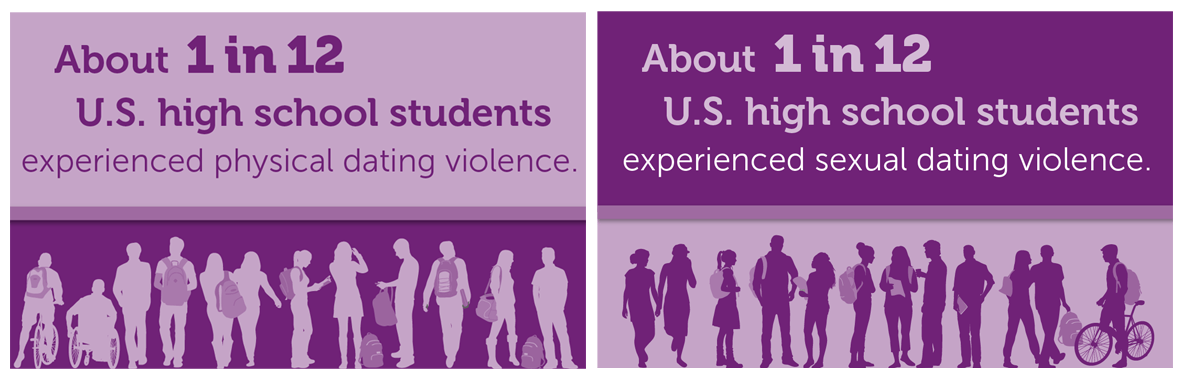
According to the CDC, teen dating violence is common among high school students. It is reported, approximately 1 in 12 students experience physical abuse, and 1 in 12 experience sexual dating violence. Female students are at greater risk and experience higher rates of physical and sexual dating violence than male students. Among the LGBTQI+ students, or students who are unsure of their gender, experienced higher rates of physical and sexual dating violence compared to their heterosexual peers.
Teen dating violence has a long-term impact on teens’ mental health causing anxiety, depression, and thoughts of wanting to unalive themselves. In addition to impacting their mental health, teens who experience physical and sexual dating violence may also engage in unhealthy behaviors such as using tobacco, drugs, and alcohol. Dating and sexual violence can also lead teens to engage in antisocial behaviors such as lying, bullying, and being physically aggressive. If you would like more information on the impact and prevention strategies please visit the CDC’s Fast Facts: Preventing Teen Dating Violence.
ACCORD’s Domestic Violence Program can also assist with safety planning, getting an order of protection, and connecting teens with services in their area. If you would like more information, please contact ACCORD’s 24/7 Domestic Violence Hotline at 1-800-593-5322.
Resources
Enjoy the Outdoors Safely this Winter
Winter is a great time to get outside and enjoy the abundant recreational activities that the natural resources in Allegany County have to offer. There are over 50,000 acres of DEC managed state lands in the county, which offer great opportunities even throughout the long, cold winter months. As with any time of year, preparedness provides the key to a safe and fun outing, but in winter this becomes even more critical.


Cross country skiing can be one of the best forms of exercise and is a way to view the backcountry and observe nature in winter. There are numerous designated ski trails about, particularly on the Phillips Creek and Turnpike State Forests in Ward and West Almond. In addition, many informal trails on state land are open for skiing, as well as seasonal forest roads that are left unplowed in winter. When there is a great enough snow depth, snowshoeing can be another interesting alternative; or if there is less snow, this can be one of the best times for hiking – without any specialized equipment, when muddy areas are solid, and the lack of leaves on the trees offer vistas not available the rest of the year.
Be prepared for your outing by telling someone your plans and by knowing the area you will be going to. Carry your phone and a GPS unit, if you have one. There are several modern mapping apps available for smart phones also. Learn to use a traditional map and compass; there is no battery to go dead, and you will have even more confidence as you travel through the woods, even if using an area with limited or no cell service. All DEC state lands have basic online maps that can be viewed on a phone, or printed, available at the website noted below.
Dress in layers; as you are moving you may want to shed an extra shirt or jacket, but if you stop for a break or get stranded, you will quickly become cold. Hypothermia can easily result this time of year when your body sweats from exercise, and with no means to get dry when you stop. Protect your extremities from frostbite with appropriate cover.
Bring a small day pack with some dry layers, snacks, and a means to start a fire in an emergency, as well as a flashlight with extra batteries. You may not intend to be out after dark, but you will be glad to have it if the unintended happens. With your pack, be sure to carry plenty of water. Dehydration is an often- overlooked danger in winter. You may feel less thirsty than you would in summer from the same amount of exertion, but your fluid level must still be maintained. Thirst is not the first indicator of dehydration!
There are several good bodies of water in Allegany County for ice fishing, with some of the most popular locations at Allen Lake, Cuba Lake, and Alma Pond. Make sure that the ice is safe before you set foot on to it. Lake and pond ice should be at least four to six inches thick to provide a safe layer for pedestrian traffic. This alone does not guarantee safety – avoid locations of moving water underneath the ice, such as springs or outlets, which will weaken even a thickly frozen depth. Slushy and wet areas indicate that the ice may be too thin to support weight due to warming conditions or disturbance. Pockets or edges of open water are also clear signs that the ice may not be safe.
With around 380 miles of groomed trails, Allegany County is a snowmobiler’s paradise. Many of these trails cross state lands, and many more miles have been provided by landowners to ride on private parcels in between. Please respect their generosity by remaining on the trails. Know your ability and be familiar with the operation of your machine. Travel in at least pairs whenever possible and stick to the designated trails, both for safety and out of respect for the landowners. Do not attempt to cross frozen lakes or ponds. Be prepared for the unexpected, as with any other outing.
The Allegany County Federation of Snowmobilers is made up of eleven local chapters. Their members volunteer to maintain the extensive network of trails. They can provide information on any locally scheduled safety courses.
Remember that it is against the law to operate a snowmobile when under the influence of alcohol or drugs and doing so can be just as deadly as driving a motor vehicle. It can be fun to stop at one of the many establishments along the trails and enjoy a meal or refreshments, but please do so responsibly!
All the public land here in Allegany County is free to visit. These areas belong to YOU, and are yours to use and enjoy. But with ownership comes responsibility: Please leave the land and water in its natural state as you found it – Leave No Trace!
New York State Forest Rangers are police officers of the Division of Forest Protection, within the Department of Environmental Conservation, and are a cooperating agency with the Partners for Prevention in Allegany County. They are responsible for the care, custody, and control of DEC lands; wildfire suppression, prevention, and investigation; and wildland search and rescue. You can get updates from the NYSDEC on Facebook, Instagram, Twitter, and Youtube
For more information, please use the phone numbers and websites below.
Allegany County Federation of Snowmobilers
Hike Smart NY (more outdoor safety tips)
New York State Department of Environmental Conservation:
Forest Ranger (Allegany County): 585-415-1521
Division of Lands and Forests (State Forest management in Allegany County): 585-466-3241
Places to Go (state land information)
National Impaired Driving Prevention Month

For more than 40 years, December has been designated as National Impaired Driving Prevention Month. Impairment comes in many forms and is easiest to describe as anything that prevents from performing a task as you normally would. We are all well aware of the dangers of drunk driving. Crashes caused by drivers impaired by alcohol and drugs are responsible for over 10,000 deaths each year. Alcohol has long been the largest contributed to that number, however with the legalization of marijuana; there may have been a change. Some studies are showing that crashes caused by marijuana use have caused more deaths than those involving alcohol. There are also plenty of instances where both have been found in the system of the driver. Alcohol and marijuana are not the only things that cause impairment. Other drugs can also cause impairment, even over the counter medicines when not used correctly. Simply put, you should not get behind the wheel if you aren’t able to operate it to the best of your abilities.

December is a very important time to relay the message of the program. With the holiday season upon us, there are a lot of people out on the road to visit families. There are also a lot of people enjoying time with their families by having some drinks. This combination can become fatal if some responsibility is not added in. This is where the goal of the STOP-DWI program comes in. It is not the goal to try to prevent people of legal drinking age from enjoying a couple drinks with family, but it is about making sure that everyone out on the road can get home safely. The “Have A Plan” mobile app was created to help with this situation. You can download it here, http://stopdwi.org/mobileapp, and it can take you through the steps of how to get home safely. Whether that plan involves getting a ride from a friend, or calling for a ride from elsewhere, we want everyone to easily be able to get home alive.

Please be safe this time of year, and all year long. Be responsible, have a plan, and make it home alive. For more information on the STOP-DWI program, visit http://stopdwi.org.
National Impaired Driving Prevention Month with New York State Trooper James O’Callaghan on the 585 Prevention Podcast.
Remember Prevention Works!